A collaborative landmark at Three Chamberlain Square
- Project name
- Three Chamberlain Square
- Project sector
- Workplace
- Completion date
- 07/07/25
- Client
- Feilden Clegg Bradley Studios and Weedon Architects
- Ranges
- Charmed, Clay
The proportion, rhythm and boldness of the scheme echoes the confidence of the city’s Victorian civic architecture.
Over the past decade, Paradise Birmingham has decisively reshaped the city centre. The £1.2 billion masterplan removed the legacy ring road of the 1960s and 70s, re-opened longconcealed views of the Grade I listed Town Hall, and established a sequence of new public squares that reconnect Birmingham with its civic core. It is an act of urban repair and, in its careful removal of obstructions, a kind of pruning.
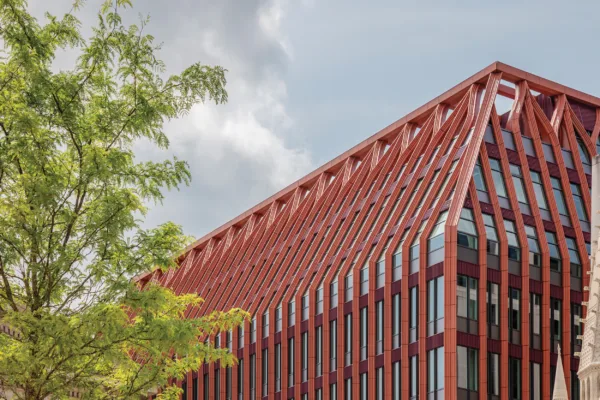
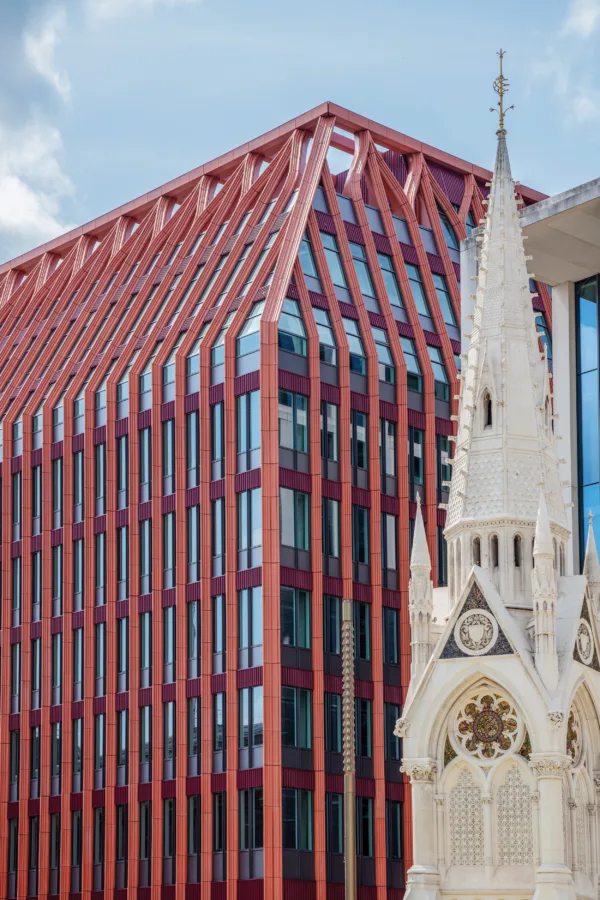
Set within this renewed context, Three Chamberlain Square adopts a poised, sculptural presence. Designed by Feilden Clegg Bradley Studios and delivered by Weedon Architects with Sir Robert McAlpine, the building is defined by fluted terracotta, curved tracery and a distinctive crown that draws the eye upwards from the square below. Its material language feels both contemporary and a continuation of Birmingham’s history of civic craft.
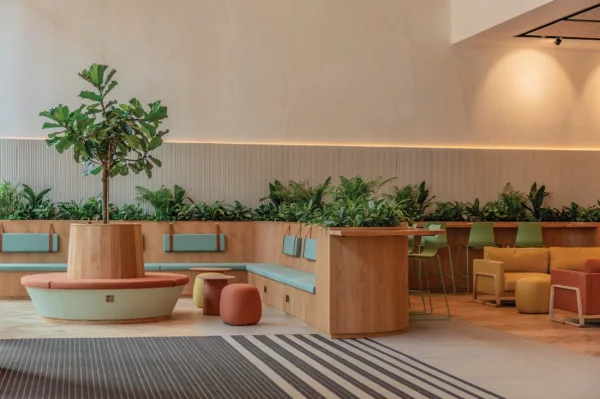
- Floor: 2CLA103
For Weedon Architects, whose involvement in Paradise stretches back to 2015, Three Chamberlain Square represents a natural progression within a long-running collaboration. Years of working alongside MEPC and Sir Robert McAlpine established a shared culture of trust and technical rigour, one that shaped both the process and the outcome.
Senior Director Owen Doherty, who led Weedon’s delivery of the project, is clear that this continuity mattered. The design intent, he notes, belonged to the concept architects, while Weedon’s role was to realise that vision with the technical discipline and compliance a project of this scale demands. What distinguished the experience was the depth of collaboration across the entire team, a genuine one-team approach that he describes as one of the most enjoyable projects of his four decades at the practice.
The building’s architectural response is closely tied to its setting. Glenn Howells’ wider masterplan set a clear expectation that each new structure should possess its own identity while remaining in dialogue with its surroundings. Feilden Clegg Bradley Studios responded with a form that acknowledges the city’s Victorian civic architecture through proportion, rhythm, and materiality, while asserting its own sculptural confidence.
Behind the composed exterior lies a demanding brief. The ambition was to deliver approximately 16,900m of commercial office space that meets the expectations of today’s businesses while setting a benchmark for environmental performance. Targets included BREEAM Outstanding, a five-star NABERS rating, EPC A, and platinum certifications for both WiredScore and ActiveScore, alongside an upfront embodied carbon target of less than 600 kgCO₂/m. Delivered by Sir Robert McAlpine at under 475 kgCO₂/m., the completed building demonstrates the alignment of design intent and execution.
As the building rises, its expression becomes more animated. The terracotta termination at the crown curves and opens, forming an almost pergola-like enclosure around the ninth-floor terrace. The complexity of this geometry required close coordination, and the contribution of fa.ade contractor Inasus was instrumental in achieving the desired precision.
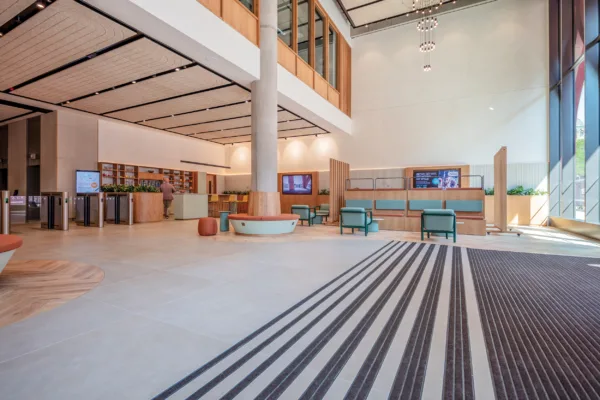
Wellbeing was a guiding influence throughout. Openable windows and generous external terraces are unusual in a city-centre office, yet here they are integral, supporting fresh air, movement and a more humane working environment. Inside, the reception continues this ethos using organic materials, including mycelium, wood wool, cork panels and repurposed timber. Even the washrooms reflect this careful approach to material selection and detailing.
Collaboration extended well beyond the core design team. Major engineering decisions, from post-tensioned slabs and glazing specifications to core planning and tile procurement, were taken collectively to save time, reduce waste and control cost.
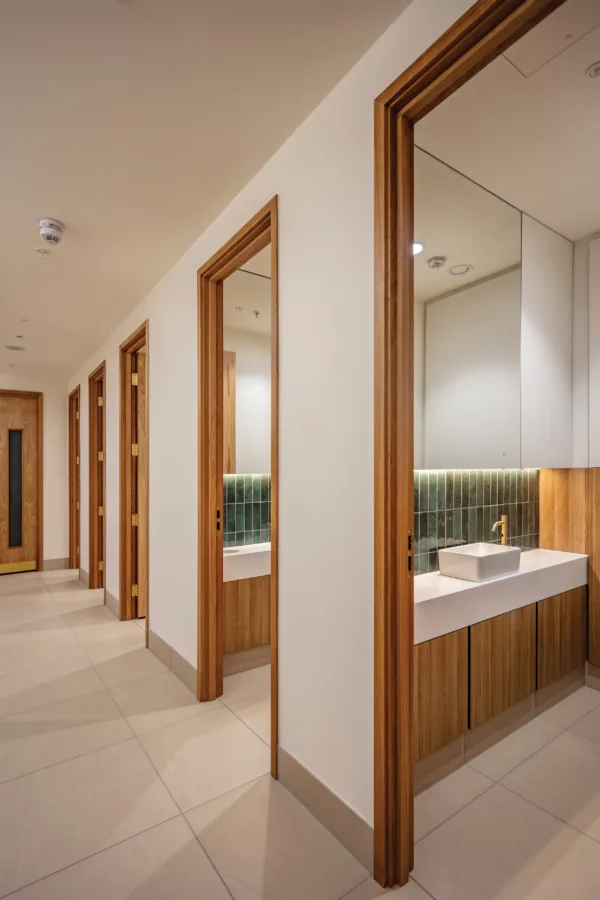
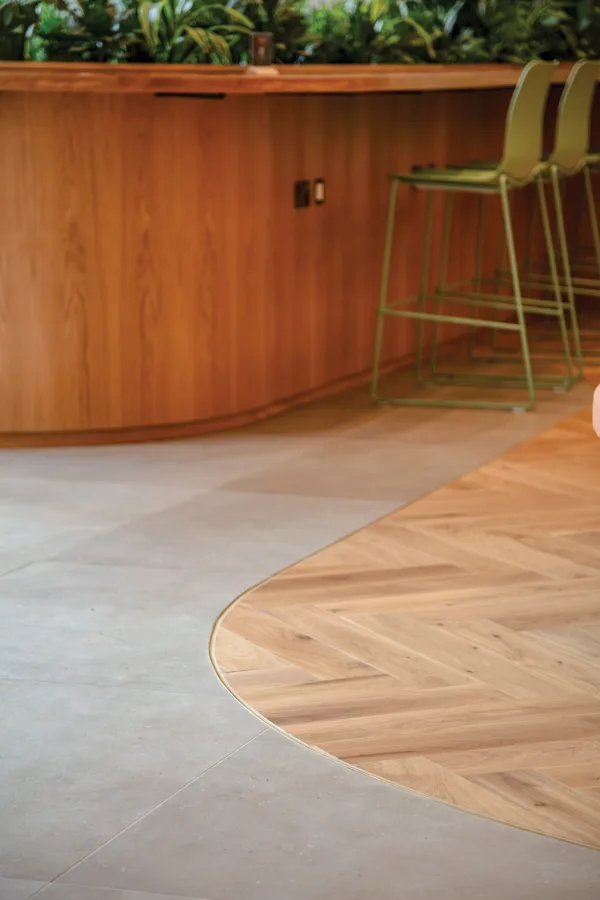
- Wall: 5LFC106
Within this framework, Solus played a key role, supplying wall and floor tiles throughout the building. Our relationship with Weedon’s technical team was strengthened over successive Paradise projects, enabling early engagement on specialist products and close coordination through to site delivery. Similarly, Solus and Weedon have strengthened their relationship with W.B. Simpson (Midlands), the tiling contractor, over the course of the wider Paradise scheme.
Solus sourced the green wall tiles and large format reception tiles early in the process, working with the design team to ensure precise alignment of joints as finishes transitioned from the concrete core into washroom spaces. Doherty summarises the approach succinctly: “If you get it right in design, it will look right when it’s built.”
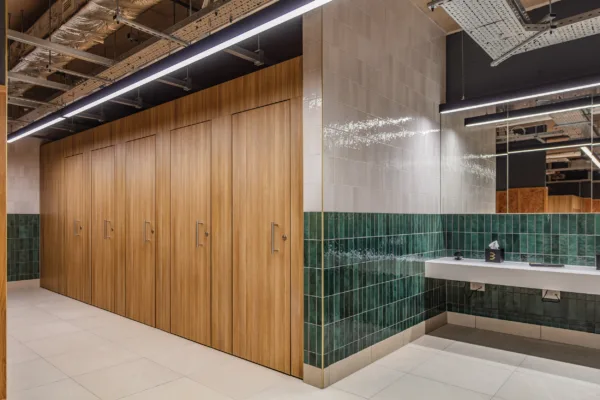
Support from Solus extended into detailed technical reviews, from bedding compatibility to movement joint positions along curved profiles, and their input was noted by the contractor as part of a trusted supply chain that enabled practical completion in the summer of 2025.
Three Chamberlain Square is defined by the collective effort behind it. For Doherty, the project stands as a testament to teamwork, a sentiment he has echoed publicly and continues to hold. In contributing to the evolving fabric of Paradise, the building has already assumed its place within Birmingham’s civic story, a contemporary landmark shaped by collaboration, craft and care.
CREDIT
- Architects (Design)
Feilden Clegg Bradley Studios
- Architects (Delivery)
Weedon Architects
- Main Contractors
Sir Robert McAlpine
- Developer and Asset Manager
Federated Hermes MEPC
- Photography
Ben McPhee


