A legacy of fire at Legado
- Project name
- Legado
- Project sector
- Hospitality
- Completion date
- 07/07/25
- Client
- Applied Studio
- Ranges
- Terracotta, Takumi, Peninsula
“Good food doesn’t start on the plate, it doesn’t start in the pan, it starts with the ingredients.” Nieves Barragán Mohacho
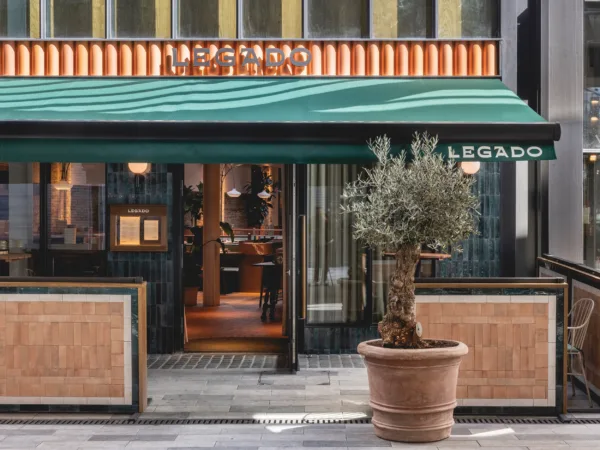
Legado means ‘legacy’ in Spanish and, as chef Nieves Barrag.n Mohacho’s follow-up to her Michelin-starred Sabor in Mayfair, it’s an emphatic affair. Designed by Applied Studio, with Patrick Abrams and Faye Greenwood as lead architects, Legado extends Mohacho’s culinary language and the architecture follows suit: informed by Spanish traditions, but consciously situated in London (Shoreditch, para ser precisos).
Two vast, traditional wood-fired ovens, built on site by Spanish craftsmen, anchor both the kitchen and the spatial logic of the restaurant. They are operational first, symbolic second: a working heart around which the entire project has been organised.
This balance is where the project finds its confidence. Greenwood describes the guiding principle succinctly: inspired by Spain but belonging in London. Instead of importing motifs wholesale, the design abstracts them through material, proportion and process.
Kitchen first
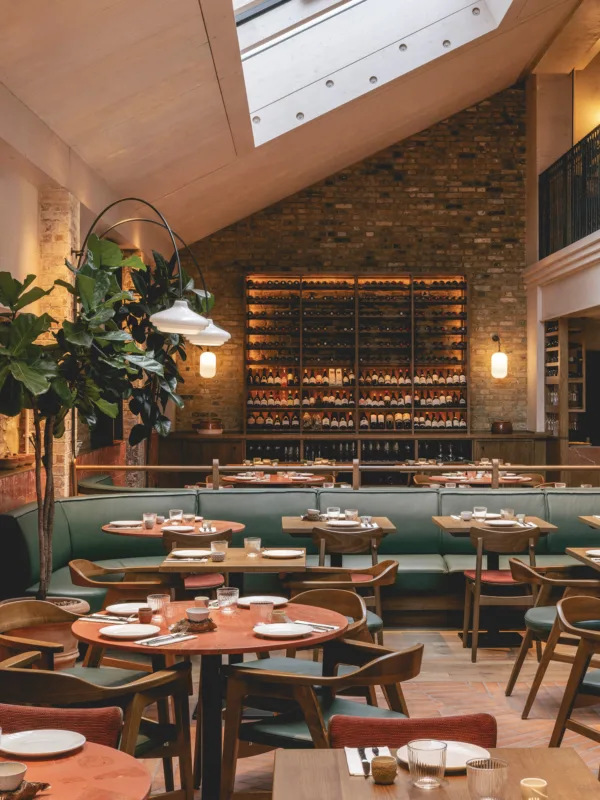
As with any Michelin-level operation, the kitchen dictated the brief. The site had been tested early for feasibility, with spatial requirements locked in before the architectural language was allowed to develop. The result is a fully open kitchen, visible from almost every table, where culinary choreography and craft are on display. Movement, workflow and extraction were resolved alongside aesthetics, with continual coordination between kitchen designers, M&E engineers and contractors.
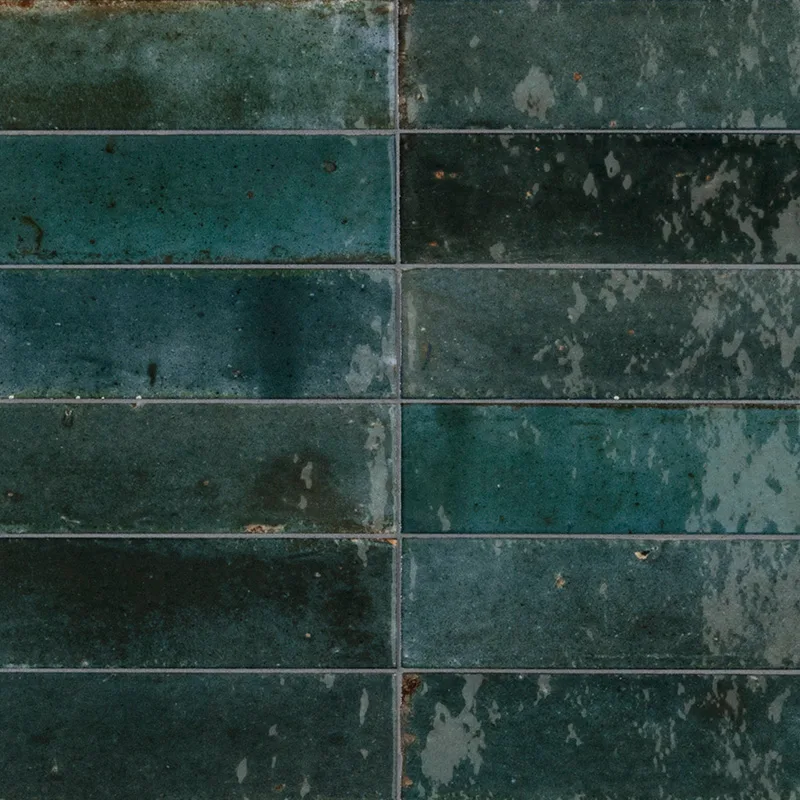
A sage-green tiled wall lines the kitchen, a deliberate departure from the clinical white typically associated with professional kitchens. Greenwood frames it as an act of restraint: the green sits quietly behind the food, enhancing colour and texture without competing for attention. This sense of theatre without excess is mirrored in the dining experience itself, where spectacle comes from the act of cooking rather than from overt design gestures.
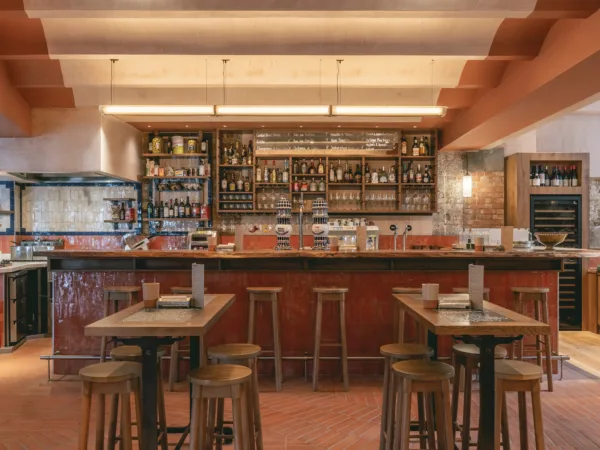
- Floor: 3YCT107
Material honesty
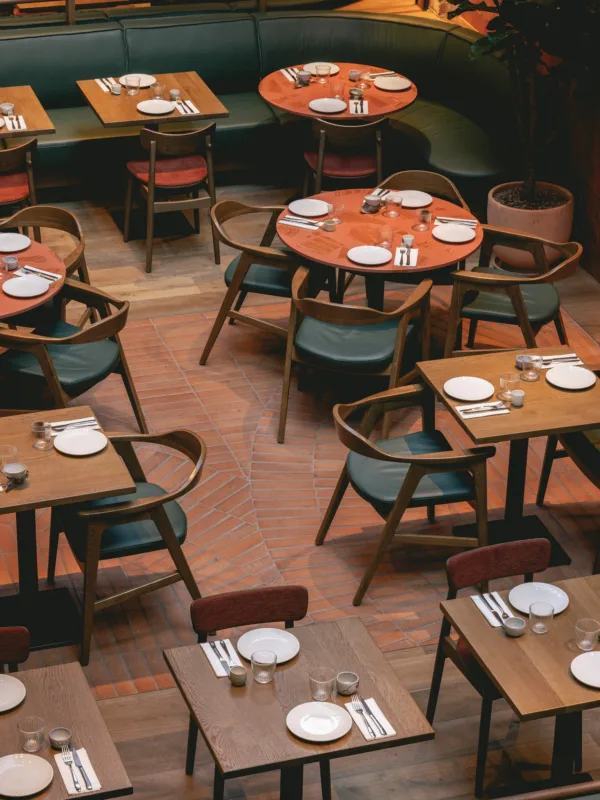
Materiality carries the narrative. Terracotta flooring defines the threshold space, laid in a hybrid pattern that combines traditional Spanish fan motifs with contemporary stack bonding. The tiles themselves, supplied by Solus, have subtly curved edges, creating a gentle undulation underfoot and catching the light as diners move through the space.
Extensive sampling and on-site mock-ups ensured grout lines were minimised, allowing the material to read as a unified whole. Elsewhere, exposed plaster is left deliberately unpainted. Rather than imitating age, it is crisp where it meets the retained brickwork of the shell, an addition that acknowledges the building’s past without pretending to be part of it. High-level relief patterns introduce texture at scale, particularly along the mezzanine, while remaining subdued enough to act as backdrop.
Zellige tiles, sourced from Morocco, appear across counter fronts and kitchen walls, all nominally the same colour but varied through firing and glaze. Their irregularity reinforces the project’s interest in craft and authentic variation, qualities that resonate strongly with the food itself.
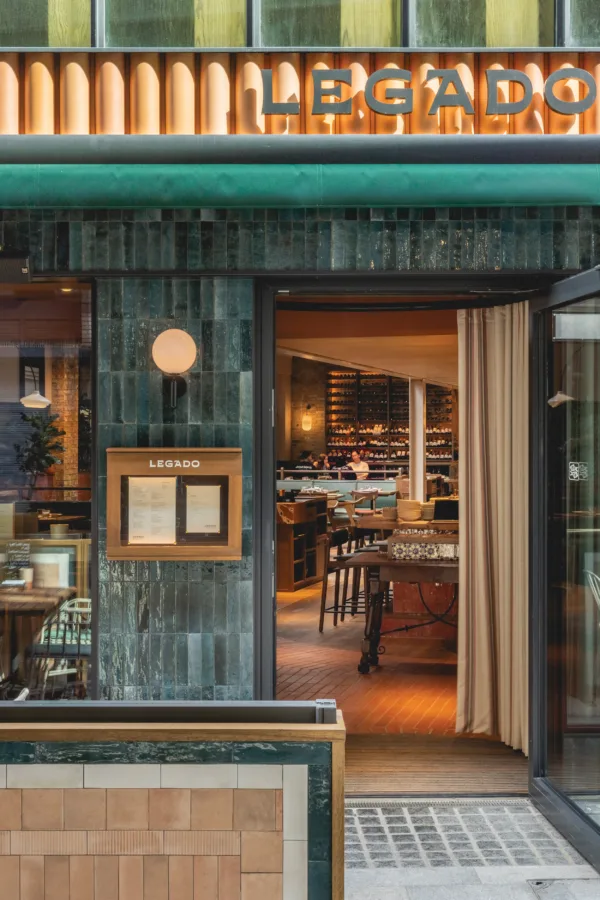
- Wall: 5PAS103
- Wall: 2TAK101
- Wall: 2TAK104
- Wall: 2TAK104D001
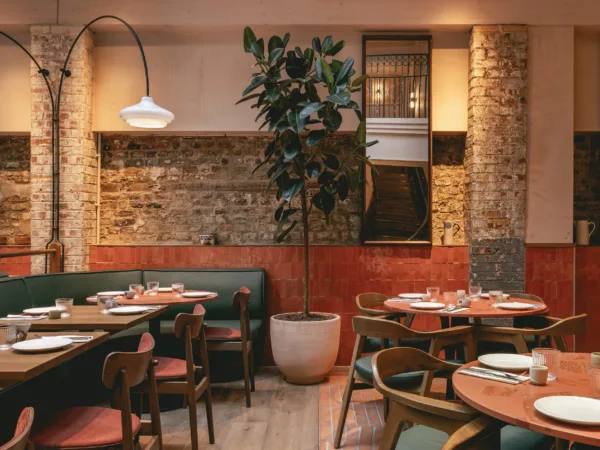
Light, volume and restraint
The site offered unusual generosity: a double-height volume, a central skylight and a mezzanine overlooking the dining room. Rather than subdividing aggressively, Applied Studio allowed the space to read as a sequence of smaller rooms defined by furniture, ceiling height and material shifts. Timber counters and stone-topped feature tables introduce warmth while remaining intentionally neutral, ensuring that plates, not surfaces, become the focal point.
Externally, the architects faced tighter constraints. The glazed curtain-wall frontage limited intervention, prompting a more tactical Legado was about understanding the ambition from the outset and supporting it properly. The team wanted a space with warmth and character, but it also had to perform day in, day out in a busy hospitality environment. My role was to make sure the tiles didn’t just look right on a sample board, but worked technically on site, with the right finishes, formats and lead times to keep the programme moving.
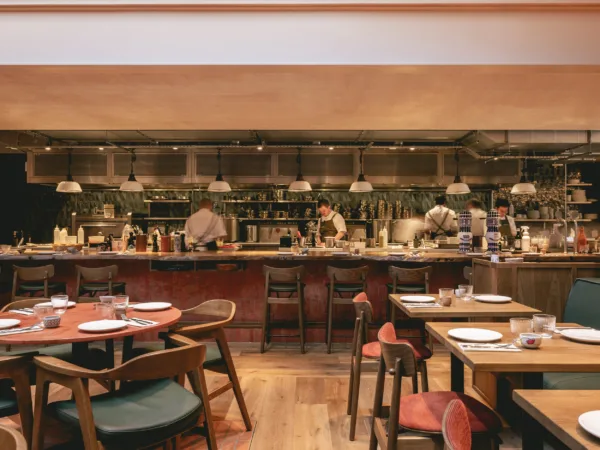
A fluid process
Legado’s design developed in parallel with the menu. As dishes were refined, spatial and technical requirements evolved in response, prompting adjustments to extraction, prep areas and storage deep into the build. Weekly site meetings and a tightly coordinated team allowed this fluidity without compromising delivery. From feasibility to completion, the project ran for roughly a year, with sixteen weeks on site.
The result is a restaurant in which architecture, food and customer experience are aligned, each reinforcing the other without hierarchy. Legado succeeds because it avoids nostalgia while still feeling rooted. Applied Studio’s contribution lies in translating that ethos into built form: a space that honours tradition through use, not imitation.
Legado is a working room, shaped by fire, craft and collaboration, and designed to let its true subject, the food, speak clearly.
CREDIT
- Architecture and Design
Applied Studio
- Photography
Billy Bolton