Douglas: A home shaped by light, calm, and circumstance
- Project name
- Douglas
- Project sector
- Residential
- Completion date
- 12/10/23
- Client
- Cem Akin
- Ranges
- Modular
- Photography
Richard Oxford
Cem Akin creates an aesthetically thrilling and highly contextual Douglas home in Hackney.
It began with a moment of chaos. Interior Architect Cem Akin and his partner had sold their house in North London and were ready to move into a new home when their lender abruptly pulled the mortgage. “We were practically homeless,” Cem recalls. “It was a shock. Everything just fell through, and suddenly we were left without a plan.”
In that disorienting moment, the plot in East London appeared: a brownfield site near London Fields. It had something, a certain understated presence, the suggestion of potential, and a location near London Fields in Hackney. “It was frightening, but also compelling,” Cem says. “The possibility was there, and the idea of building something from scratch started to feel like the right kind of challenge.”
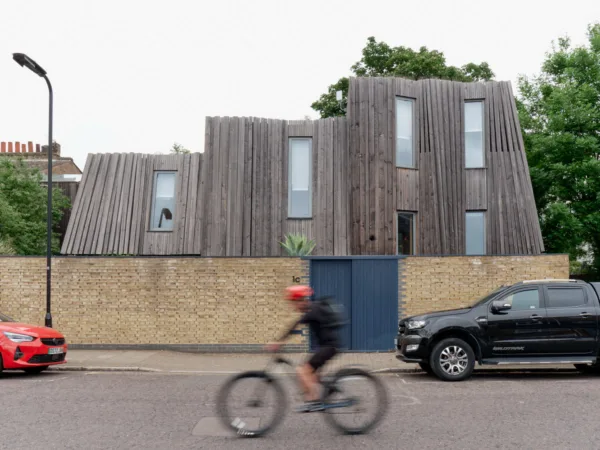
Fast forward to today, and the house that emerged from that upheaval tells a very different story. Douglas, named for the Douglas fir vertical cladding on its exterior, is calm and composed, a study in restraint and light. Its pale brick exterior and textured grey timber sit confidently within the local context, referencing the neighbourhood’s industrial character without mimicking it. Inside, the home opens up gently: quiet volumes, generous glazing, soft surfaces and crisp geometry create an atmosphere that feels grounded, luminous, and serene.
“We weren’t trying to do anything flashy,” Cem explains. “The idea was always to create something calm, clean, and considered, something that felt settled in its place.” Budget constraints required careful thinking, but the guiding principle never shifted. The house would be shaped by its materials, and those materials would be honest: concrete, timber, glass and brick, each chosen for its texture, durability, and integrity.
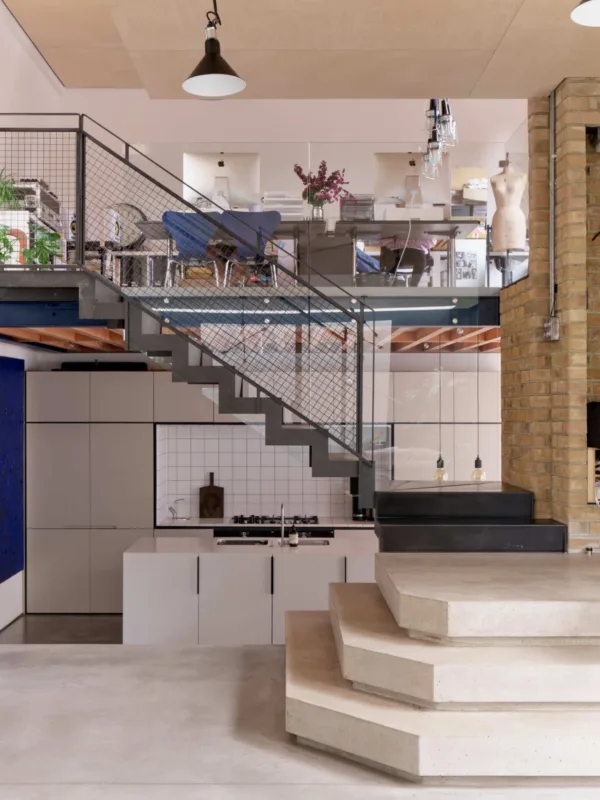
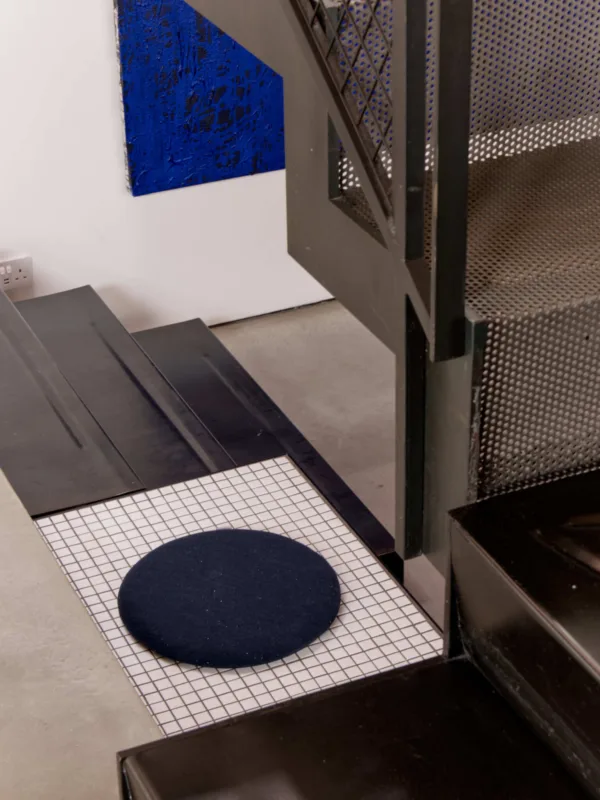
Large panes of glass bring light deep into the plan, while mirrored surfaces extend and reflect it with precision. In the central stairwell, a perforated steel stair becomes a sculptural moment, catching the light and casting fine shadows, while nodding discreetly to the building’s industrial setting. “Hackney has this great mix of grit and imagination, old industry and new ideas,” Cem says. “I wanted the house to feel like it belonged here, without copying anything directly.”
The influence of stripped-back European modernism is also clear. “Architects like Peter Zumthor or Vincent Van Duysen were definitely in my mind,” he notes. “They work with this incredible restraint but never lose warmth. It’s architecture that breathes.” That influence surfaces not only in the home’s compositional clarity, but in its material expression: precise yet tactile, minimal but not sterile.
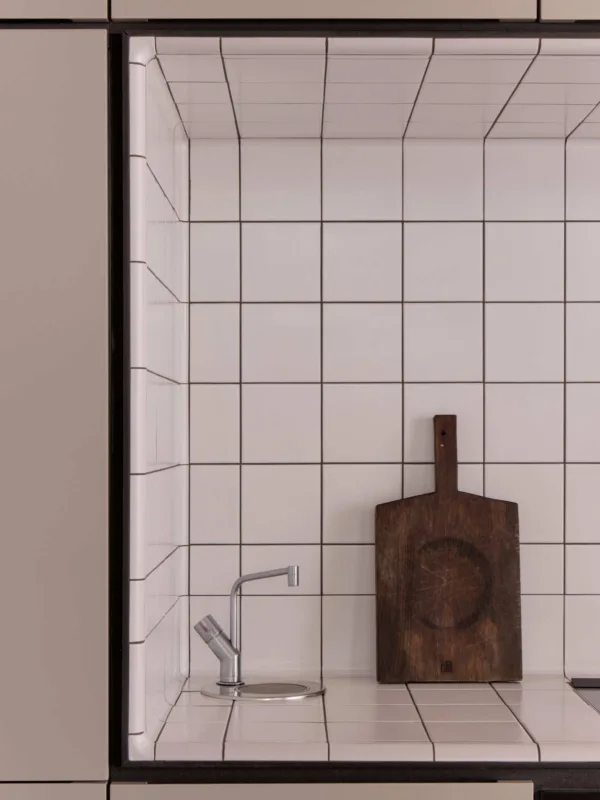
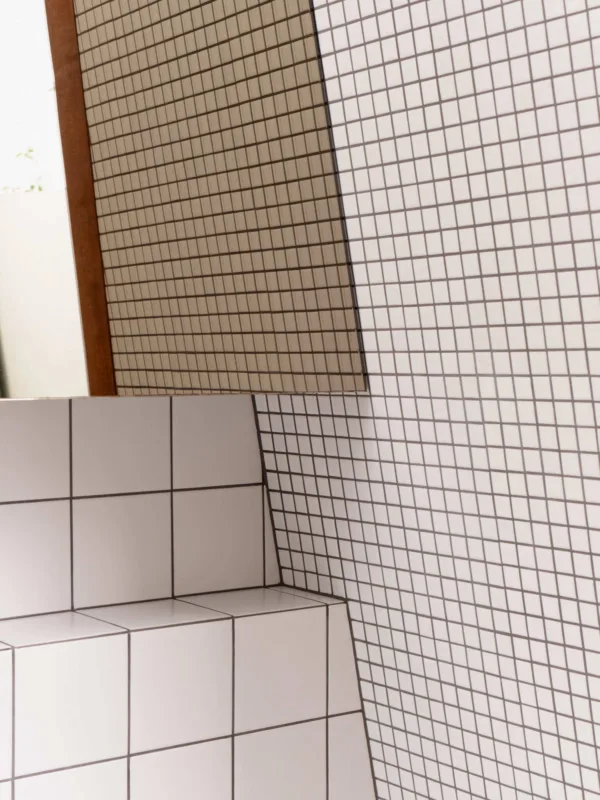
Tiles, too, became a defining detail. “Solus had exactly what I was looking for,” Cem says. “I’ve always loved working with graph paper. It’s how I think when I draw. So, I brought that idea into the house with a mix of tiles and smaller mosaics, both in matt white, which I aligned across the space.” The contrasting scales introduce a sense of rhythm and structure, like drawing in three dimensions. “There’s something quietly playful about it,” he adds. “It felt personal, and practical.”
The project, however, was anything but easy. “It was one of the hardest things I’ve ever done,” Cem admits. “There were moments of real doubt. You think, what have I taken on? But then there are these moments where it clicks—when you see it taking shape, and it feels right.” Working within a tight budget pushed him to lean on his professional contacts, sourcing highquality materials at the best possible value. “It became a bit of a balancing act,” he says. “I was probably relentless. But it paid off.
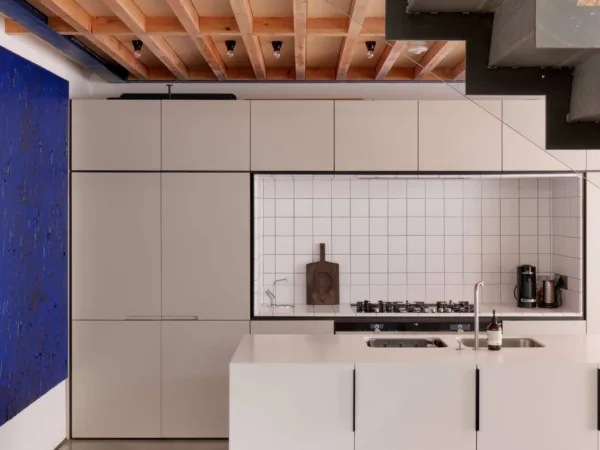
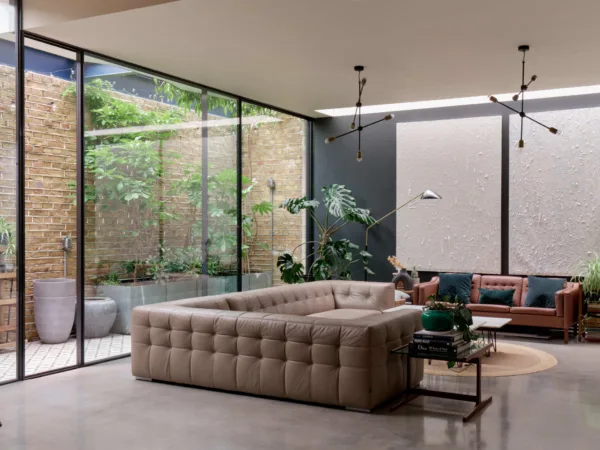
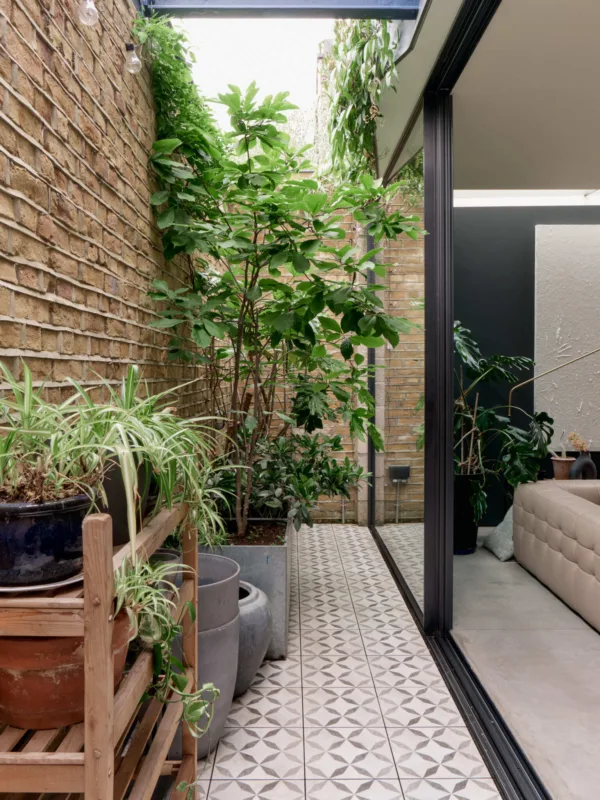
What emerged is a house that honours its origins while moving deliberately beyond them. “There’s always a gap between concept and completion,” Cem reflects. “But this came pretty close. It feels calm. That was always the aim.” The ground floor flows with ease from kitchen to dining to living space, connected by polished concrete underfoot and softened by timber joinery. Upstairs, bedrooms feel tucked away and private, yet still visually connected to the courtyard and sky.
“It’s very much a home,” he says, “but one that was always meant to be flexible. We’ve always enjoyed a good house party, and the layout reflects that. It needed to feel peaceful day-to-day, but able to shift gears when we’re entertaining.” That adaptability is everywhere— from the open-plan ground floor to the way the outdoor spaces act as extensions of the interior. Nothing feels overly formal or precious; the house embraces use.
Looking ahead, Cem is channelling the lessons of Douglas into new work. “I’m currently pitching for a really exciting office project with a major retail brand. The brief is all about rethinking how we work now, how spaces can support that shift. It’s early days, but there’s a lot of potential there.”
Throughout the day, light bounces off strategically placed mirrors beneath long linear skylights, casting beautiful spectrums that shift in appearance depending on the surface; whether it’s a painted wall, polished concrete floor, tiled splash-back, or the metal stairs.
From early disruption came something deeply grounded. Douglas is not loud or ornamental; its confidence lies in its clarity, its warmth, and its ability to adapt to life as it is lived.
- Walls: 5QNA368


