One Centenary Way reinvigorates a neglected part of central Birmingham
- Project name
- One Centenary Way
- Project sector
- Workplace
- Completion date
- 06/03/23
- Client
- Howells and Weedon Architects
- Ranges
- Stoneblend
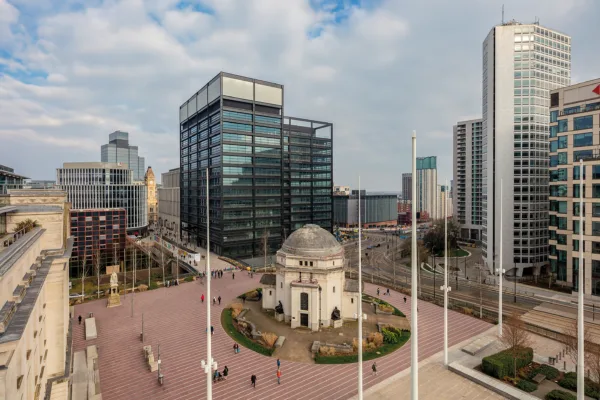
The Paradise development project is arguably the most significant piece of urban redevelopment in the UK so far this century. The 280,000 sqft One Centenary Way is one of ten buildings linked by three squares that reinvigorates a neglected part of central Birmingham.
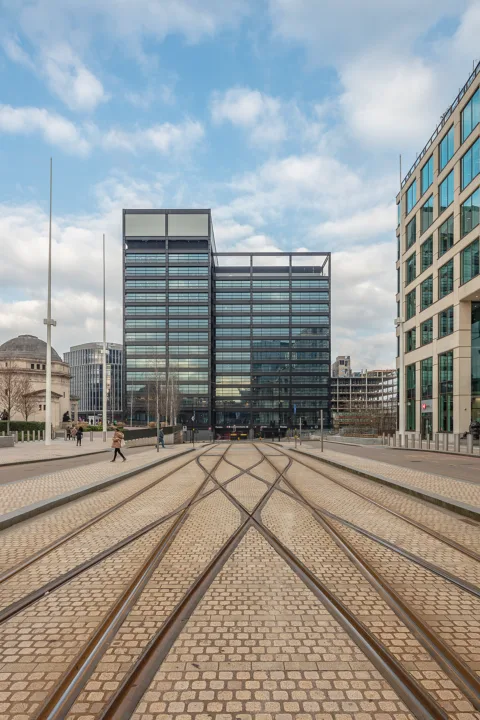
One Centenary Way in Birmingham straddles the A38 Queensway Tunnel like a bridge. It is a piece of design and a feat of engineering that demonstrates the brilliance of the team working on the Paradise development project.
Designed by Howells, delivered by Weedon, built by Sir Robert McAlpine, this 13-storey office building occupies a prominent location above a busy thoroughfare, connecting two of Birmingham’s most important public spaces, Chamberlain and Centenary Squares.
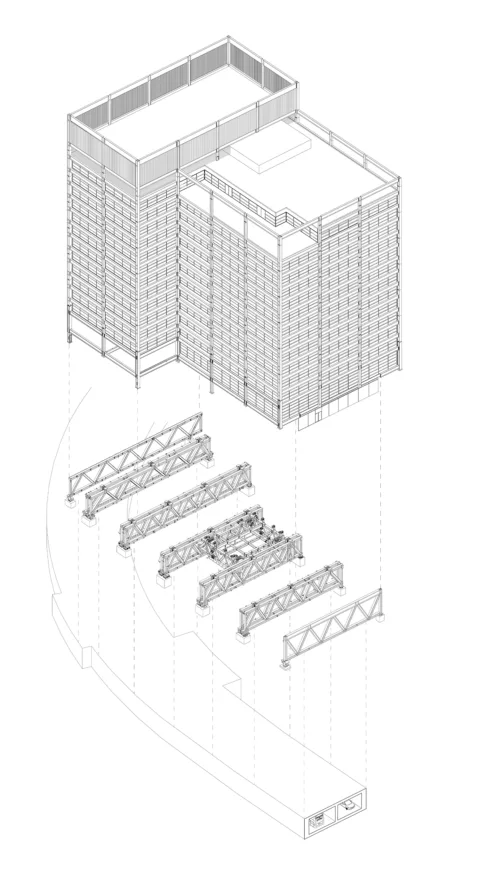
The presence of a busy traffic tunnel below, which remained open during the build, precluded the construction of a load-bearing core or extensive foundations.
Collaborating with Arup, Howells devised a design with sixteen, storey-height, Vierendeel trusses transferring the building's load to either side of the subterranean artery.
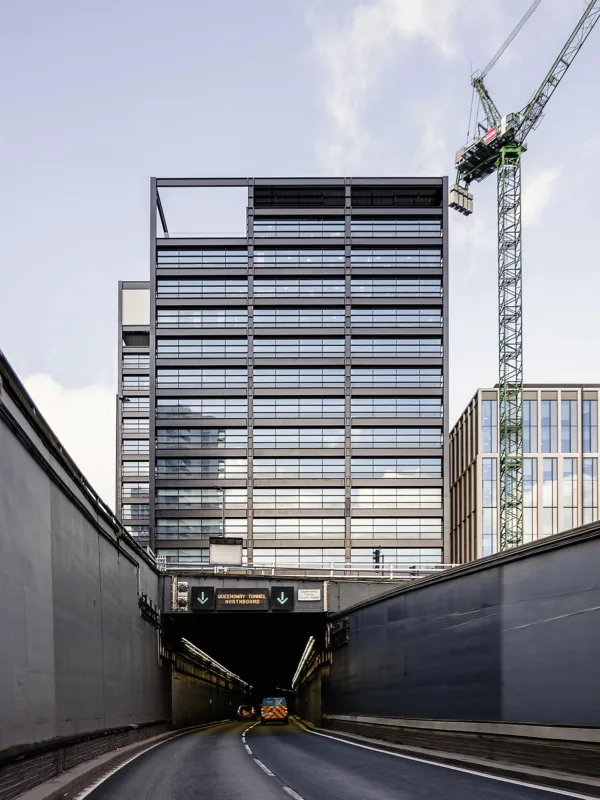
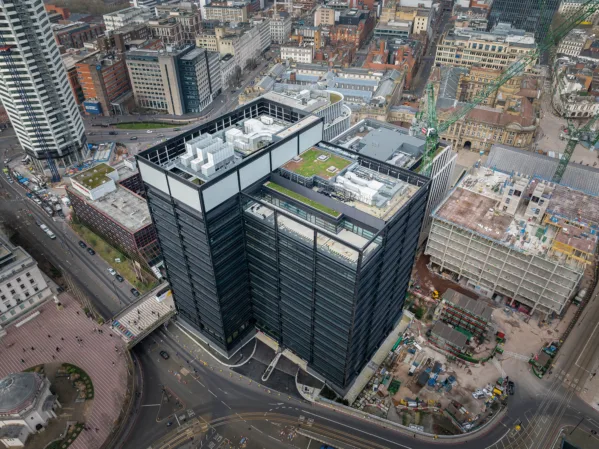
The steel exoskeleton resting on the substructure provides workspace for 3500 people, along with an outdoor terrace and street-level amenities. Crowning the building, an 8m high sky lantern, integrated within the structural grid of the façade, adds a 360-degree lightshow to the Birmingham skyline, visible for kilometres.
The building exemplifies the resurgence of this vibrant metropolis and best practice in the creation of sustainable spaces. It also marks the initial step in the second phase of Howells' ambitious Paradise Masterplan.
This transformative project envisions the creation of seven additional buildings, a 250- room hotel, and expanded office, leisure, and retail areas. With completion targeted for 2030, the masterplan aims to revitalise the city centre, fostering a more connected and vibrant atmosphere.
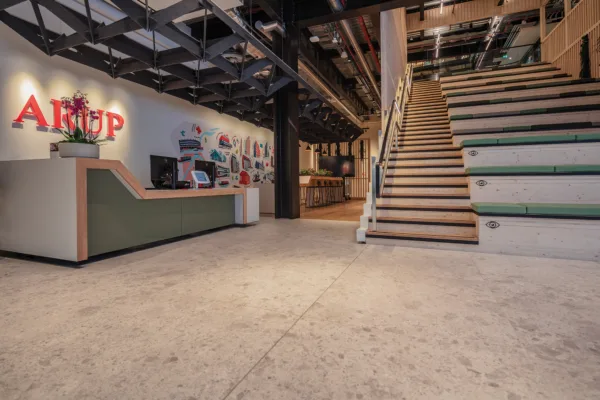
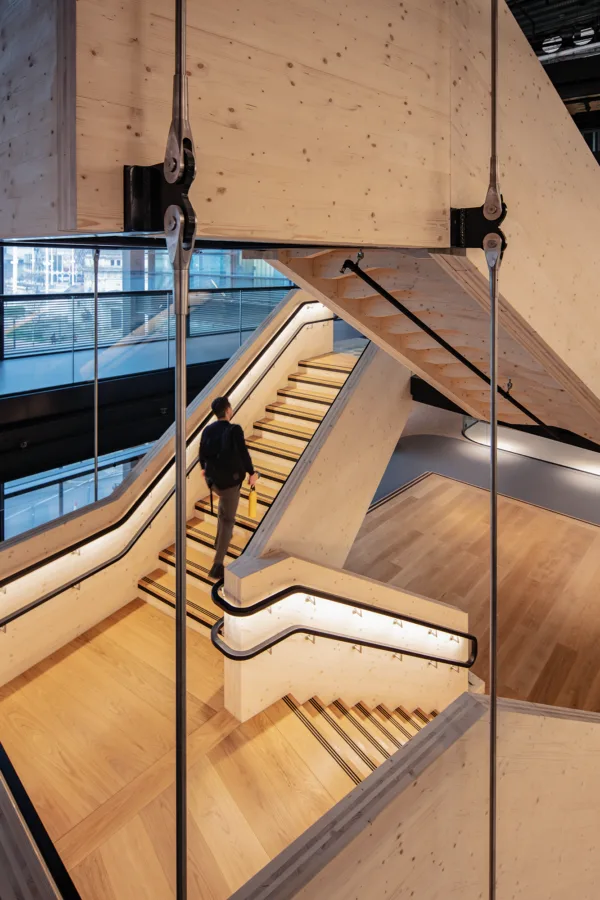
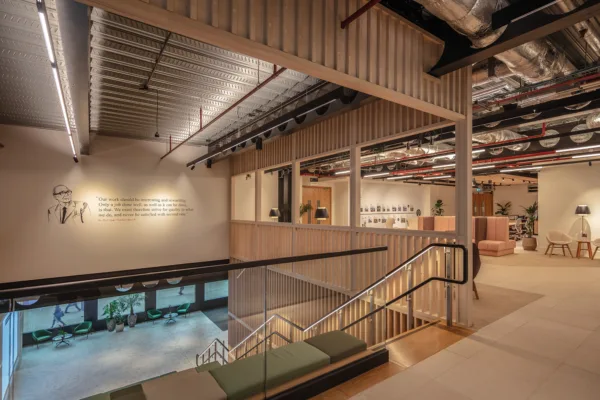
The interior layout utilises a 9x12m grid to minimise the need for columns, while the façade has a strong horizontal emphasis. Its interior spaces are highly configurable, while offering panoramic views of the city Reflecting the external structure, the rooms feature exposed steel frames and a palette of natural materials with custom-made fittings.
One Centenary Way is also home to Birmingham’s first large-scale cycle hub, offering secure lock-up spaces for 500 bikes, and facilities such as showers, locker rooms, and bike repair and hire services. Environmental sustainability and reducing carbon dioxide emissions were central to the project, which used recycled British steel to replace concrete foundations and superstructure, and harnessed wind and biomass energy.
This fully electric building is equipped with intelligent management technology that collects real-time energy consumption data and, therefore, enables efficient resource use.
Optimising the production route from factory to construction site and the use of rolled steel sections made it possible to save 6000 metric tons of embodied CO2 and reduce the overall carbon footprint. The project aims to obtain BREEAM Excellent certification.
CREDIT
- Design Architects
Howells
- Delivery Architects
Weedon Architects
- Contractors
Sir Robert McAlpine
W. B. Simpson & Sons Ltd
Overbury- Photography
Ben McPhee
Howells
Greg Holmes