A green thought in a green shade at Royal Botanic Garden Edinburgh
- Project name
- Royal Botanic Garden Edinburgh
- Project sector
- Hospitality
- Completion date
- 01/06/22
- Client
- 442 Design
- Ranges
- Charmed
The Royal Botanic Garden Edinburgh (RBGE) and the Royal College of Physicians Edinburgh were founded by doctors Sir Robert Sibbald and Sir Andrew Balfour in the late 1600s.
At that time, the studies of botany and medicine were closely aligned. In fact, until the early 20th century medical students in Edinburgh studied botany: Charles Darwin and Arthur Conan Doyle being two famous alumni.
After the first COVID lockdown, the Scottish government realised the importance of access to green spaces to the mental and physical health of the nation and were quick to reopen the Royal Botanic Garden. Although no longer a ‘physic garden’, ‘The Botanics’ continue to fulfil their original purpose 352 years after their inauguration as places of healing.
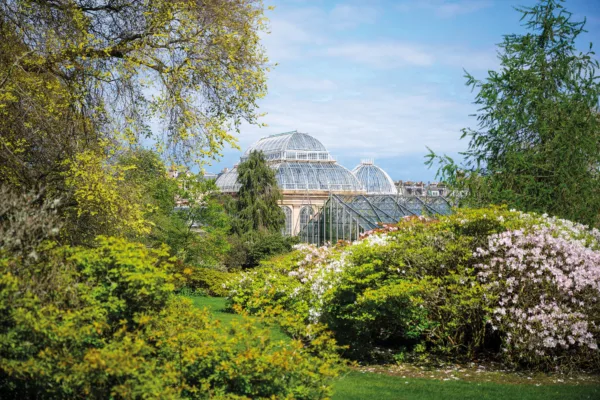
The gardens are a huge visitor attraction, attracting over a million people per year pre-pandemic, and it is not difficult to understand why. The current site of 70 acres located one mile from the city centre, includes a visitors’ centre, Glasshouses, restaurants, cafés, a research library, an art gallery, and a centre for research, all set amongst some of the most exquisite and diverse gardens in the world.
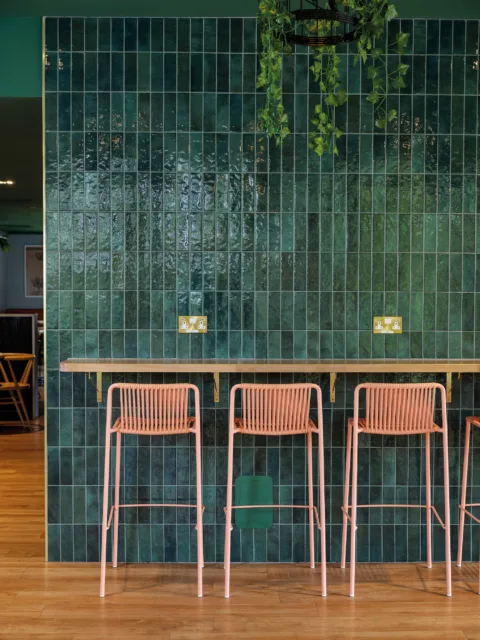
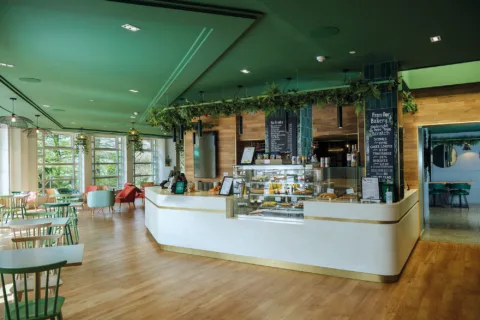
Solus recently provided tiles for a renewal project that includes the shop, restaurant, cafés, and events hall. The Smitten tile from the Charmed range was used which has a complexity and depth of colour as well as a glossy sheen suggestive of the epidermis of a tropical plant. Faye Marshall from 442 Design talked me through the work.
“The Terrace Café was completely refurbished to enhance the customer experience and connection to the surroundings. The concept was to bring the lush, warm greens of the foliage in the gardens into the visitor spaces to create one continuous journey. The natural depth and reflection of the Solus Smitten tile was perfect for our project. We liked the tile so much that we kept finding ways to use it further, on backsplashes and counters. We even clad central columns to create features through the new servery counter. An organic grout was used (Kerakoll Fugabella) to achieve a green colour as well as being sustainable.
“The flow of visitors around the service island is much more organic now. We were able to reuse wood planks from the previous counter, sand, restain and fit to the walls to create a new feature cladding. Reusing materials is a priority for us and a great way to sequester carbon.
“Some botanical drawings were taken from the RBGE archive, framed, and mounted on the walls to create a further connection to the gardens and its history. You can now enjoy a luxury afternoon tea here, delicious bakes and coffee with a view of the extraordinary gardens.”
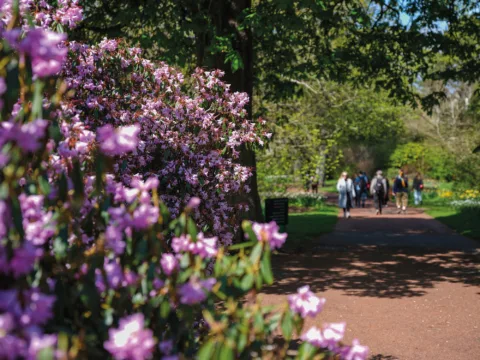
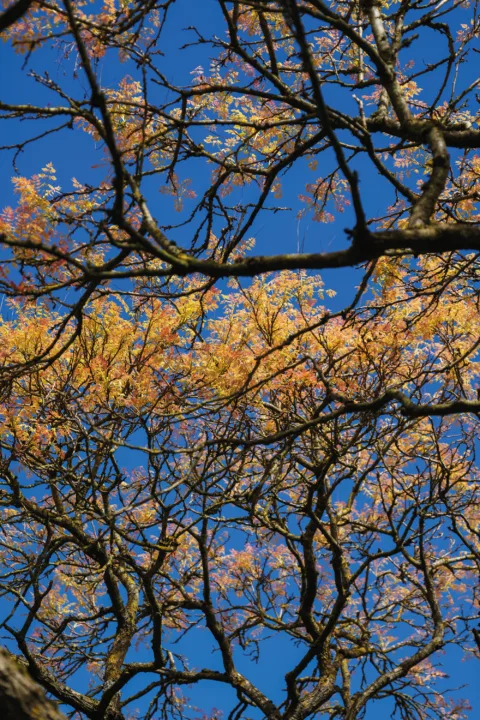
The renewed Terrace Café is a pleasant place to be. Rhododendrons are not only on the walls as botanical drawings but also surround the café as part of the ‘living collection’. Rhododendrons are a key area of research for the RBGE; the collection started in the early 20th century and currently half of the 1024 species in the genus are present.
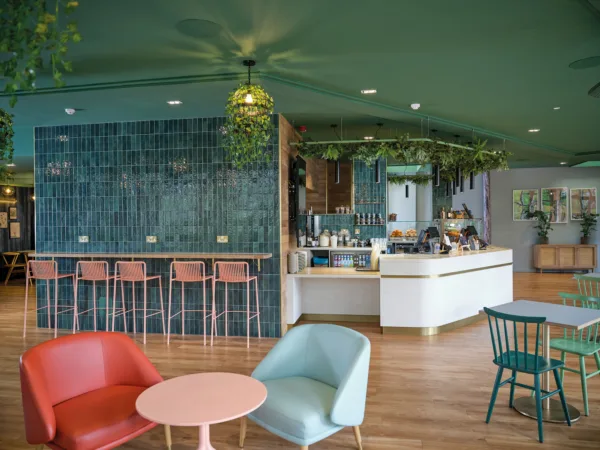
- Wall: 5LFC106
"Fundamentally, we all rely on plants. There is nothing without plants."
Suzie Huggins, the Communications Manager for the Edinburgh Biomes project, explains that rhododendrons are only one part of the work that RBGE does to support biodiversity and conservation.
“There’s a scary fact that, perhaps, still not enough people know, which is that 40% of the world’s plants are under threat. We sometimes call it ‘plant blindness’. People will look at a picture of a cute panda and think, ‘Oh the poor panda’s endangered’, they don’t look at the tree the panda is on and wonder if the tree is also endangered. Climate change has weakened a lot of species making them more susceptible to disease.
“Fundamentally, we all rely on plants. There is nothing without plants. So, a lot of the research we do is biodiversity research. We go back to the fundamentals. Before asking how we save something we ask, ‘What is it?’ and we find out as much as we can about the plant, because only by understanding more about each plant and how they work together can you get to the point where you have a plan to save them.”
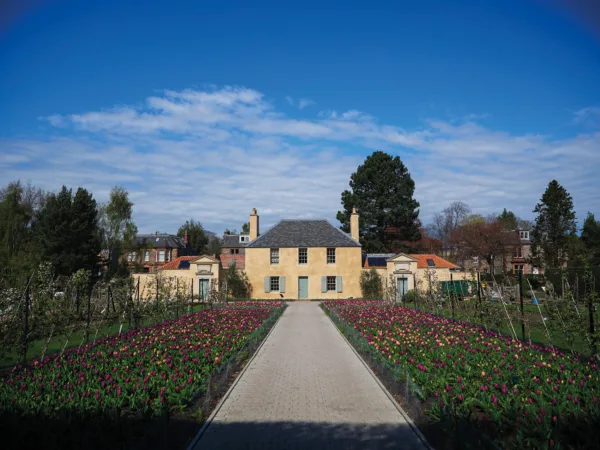
Biodiversity research is supported by the Herbarium, holding over 3 million specimens from all over the world that have been collected or donated over three and a half centuries. Many have been pressed into paper or pickled in jars by generations of scientists. Developments in genome sequencing technology means that this vast, historical database can now be read in new and exciting ways. As if each sample were a time capsule waiting for the right key to open it up.
RBGE is not only looking to the past, there are also big plans for the future. Expecting to complete in 2028, the Edinburgh ‘Biomes’ project is a massive restoration and development project that will rehabilitate the iconic 200-year-old heritage palm houses, the 1960s A-listed ‘front range’ Glasshouses, and the research Glasshouses where scientists work. A new 21st century Glasshouse is being developed, as well as a plant health hub to study plant diseases, and a new energy centre to help reduce carbon output.
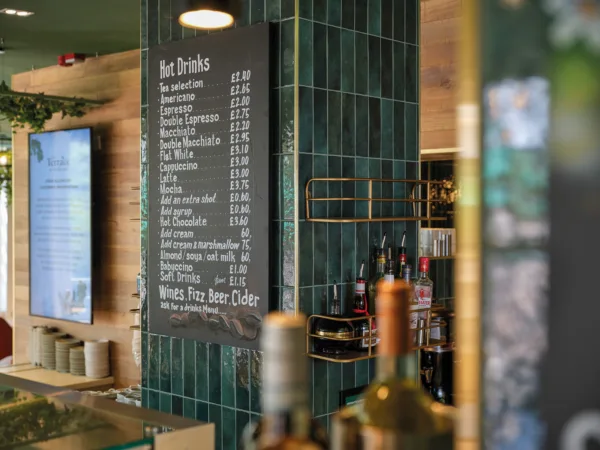
- Column: 5LFC106
Most of the specimens in the Glasshouses are of conservation worth and some are even extinct in the wild. There is no spare Glasshouse and at times the project becomes a high-stakes game of Tetris, moving 40,000 plants to make way for construction then moving them back with the utmost care. Architects, contractors, and horticulturalists are in constant consultation finding innovative ways to the challenges to the collection that are posed by the project.
But, as Suzie Huggins points out, “This project is a duty. We have a responsibility to protect and conserve our collection for the nation and the world.” Funding for the project comes from the Scottish government and the National Lottery but also from the public. “A lot of support comes from the mums, dads, and grannies that pass through the door and make donations. We’re a well-kent face in Edinburgh. People love what we do and want to support us and since the lockdowns, people have a heightened appreciation for the healing power of the green spaces.”
CREDIT
- Interior Design
442 Design
- Photography
John Sinclair