ReCover: designing for change, not waste

Tiles are often installed as if they will never be touched again. Fixed permanently, bonded to the floor, and lifted only when a space is stripped back to the slab, they tend to follow a predictable path from specification to aggregate fill. This is at odds with how many interiors are used. Shops are refitted, offices reorganised, exhibitions dismantled, and hospitality spaces refreshed, sometimes within a couple of years of completion. The finishes are durable, but the thinking behind them often is not.
ReCover asks: what if tiled floors were designed to be lifted and used again?
Developed as a dry-lay system, ReCover allows porcelain tiles to be installed without adhesive or permanent fixing to the substrate. The tiles sit securely in use as one interlocked system, performing as expected underfoot, but can be lifted cleanly when the space changes. The system can also be cut to accommodate curves, corners and any space as required, just like a traditional tile. There is no hacking up of screeds, no breaking tiles to get them out, and no need to write off good material simply because a layout has evolved.
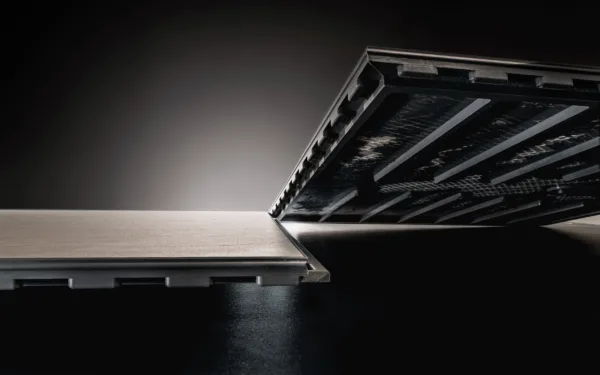
In practical terms, ReCover enables installation, uplift and reinstallation with far less disruption than a conventional floor and significant time and cost savings.
Tiles can be removed intact and either re-laid in the same space, relocated elsewhere, or held back for future use. The aim is straightforward: keep high-quality material in circulation for longer, at the same level of finish it was designed to deliver.
The most meaningful carbon savings in the built environment come from avoiding replacement in the first place. Each time a tile is reused, the embodied carbon invested in its manufacture works harder. Waste is reduced, new production is deferred, and the need for adhesives, remediation and heavy strip-out is minimised. Rather than leaning on end-of-life recycling, ReCover keeps materials in use where they add the most value.
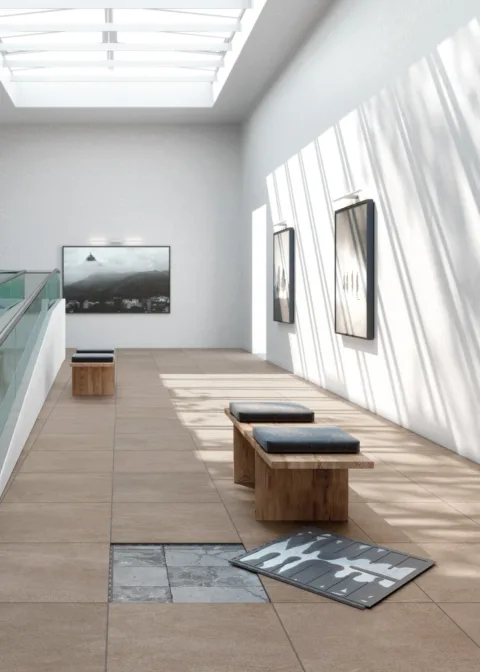
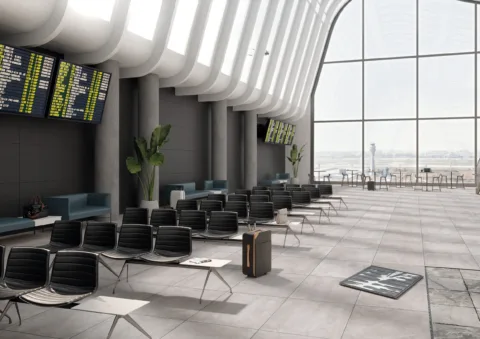
ReCover is not intended as a catch-all solution. It works best in larger spaces with a degree of churn built into their future: commercial interiors, retail environments, hospitality projects, exhibition spaces, and workplaces where reconfiguration is expected.
The product is also ideal for heritage settings where historic substrates must be protected and is of particular interest to architects and designers working in refurbishment.
Solus will help clients assess whether a dry-lay approach is appropriate, and to support specification choices that reflect how a space will really be used over time.
Buildings change, and interiors change with them. Designing floors that acknowledge this from the outset allows materials to be treated with a little more care and intelligence. By planning for change, Recover helps reduce waste without asking projects to compromise on performance, appearance, or practicality.
NEWSLETTER
Get the latest news and updates sent straight to your inbox.


Solus celebrates 30 years
11th Dec 2025


Automatica: Design, Dispense, Deliver
3rd Jul 2025


Goodbye to 2024
17th Dec 2024

Spolia wins the top spot at Mix Awards North
29th Nov 2024

Pantelleria – The Black Pearl of the Mediterranean
12th Sept 2024

Spolia longlisted for Dezeen Awards
12th Sept 2024


The story of the Ceramophone
23rd Feb 2024


Solus Clerkenwell reopens its doors
31st Jul 2023


How can design drive optimism and change?
15th Jun 2023


Quarry, Clay, and Kiln: The story of Ketley
19th May 2023


In conversation with Mauro Mazzi, CEO of Mirage
17th Apr 2023


How do materials shape positive experiences?
6th Oct 2022

Meet Ken Graham, Sustainability Manager
23rd May 2022


Blu Ponti reflects Sorrento’s stunning seascape
3rd Apr 2021

Solus celebrates 25 years
16th Mar 2020