Raising the bar: how Solus Plus is redefining responsible sourcing in tiles
Tiles are often chosen for their performance and aesthetics, but what about how they’re made? What are the environmental and ethical costs before a product reaches the showroom?
That question lies at the heart of Solus Plus: a new mark of trust that identifies responsibly sourced tile ranges from Solus. Backed by the respected BES 6001 standard, Solus Plus goes beyond sustainability marketing. It’s an independently audited framework that rewards good practice, drives continual improvement, and makes responsible procurement easier for specifiers.
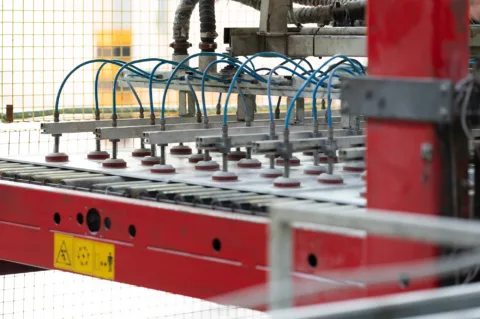
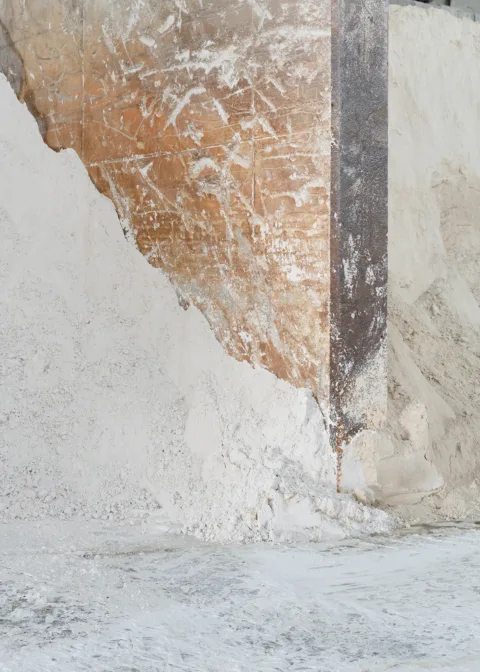
What Solus Plus means
Solus Plus highlights products that meet strict criteria on environmental impact, labour conditions, and supply chain transparency. Underwriting this is BES 6001, a certification developed by BRE (Building Research Establishment), which assesses how a company manages responsible sourcing, not just what it claims.
For specifiers, that means clarity. Solus Plus products don’t just come with a sustainability promise, they come with credible, independently verified evidence.
“One architect recently told me: ‘You’re taking all the guesswork out.’ With BES 6001, we’ve done the graft, asked the right questions, and had it all externally verified. That builds trust.” Ken Graham, Sustainability Manager, Solus.
Why BES 6001?
The idea took shape during research for internal training on industry certifications. Ken came across BES 6001 and saw its potential.
“Most of the certifications we share with clients come from our factories,” he says. “Solus has always sourced responsibly, but we didn’t have anything that was ours. BES 6001 bridges that gap.”
Earning the certificate was no small feat. The framework goes well beyond sustainability, touching on health and safety, corporate governance, and social responsibility.
“Achieving the certification doesn’t mean our work is complete,” says Byron Nikolouzos, Business Systems Manager, “but we now have a platform to build on.”
Making the most of what’s already there
Solus was already doing much of the work required. Existing certifications like ISO 9001 and 14001, Investors in People, robust supplier audits, and well-documented procedures all helped. Byron credits teams across the business, from warehousing to CSR, for laying strong foundations.
Even so, the process required new thinking.
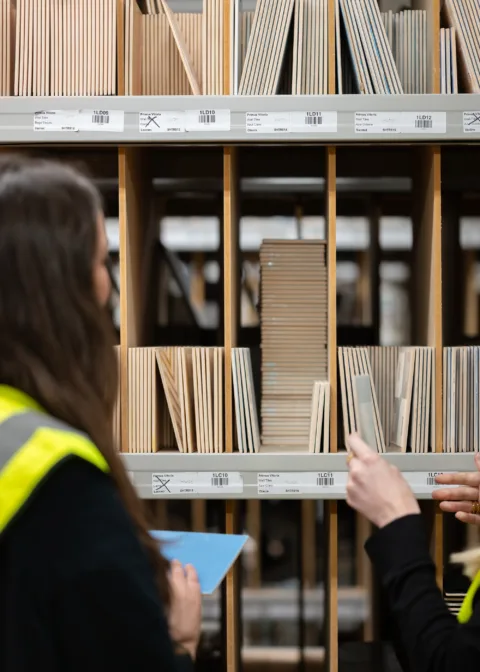
“It pushed us to find better ways to collect data,” Byron explains. “Things like automating how we track the carbon footprint of our sample deliveries, those systems didn’t exist before.”
This, says Ken, is what makes Solus stand out:
“No one else in the tile sector is tracking sample production emissions like we are. It’s technical, but it matters—and it came directly out of this process.”
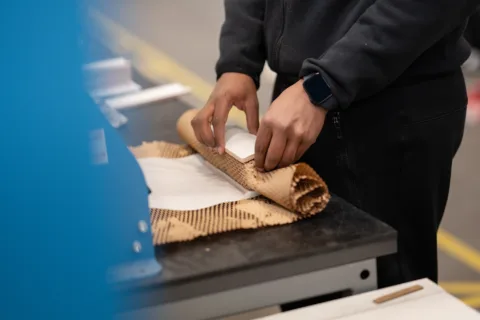
Internal change, external impact
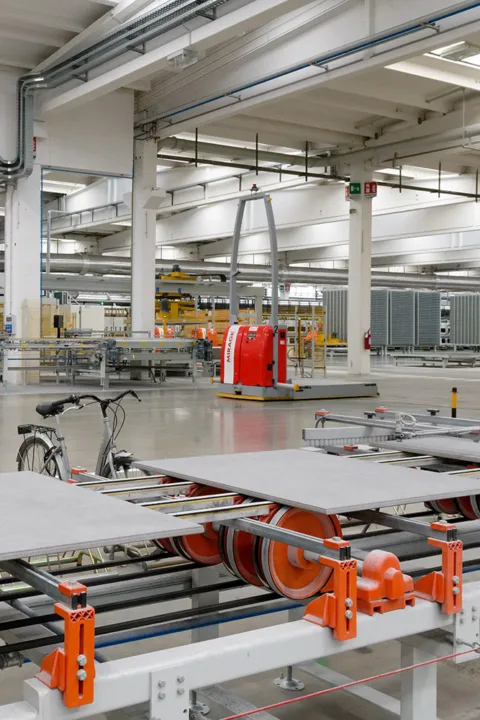
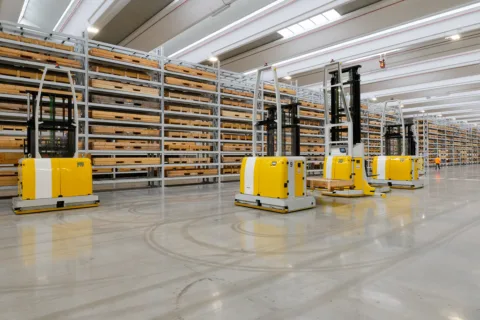
The benefits of Solus Plus aren’t just internal. They ripple across the supply chain. To qualify under BES 6001, at least 70% of products by weight must come from factories certified to ISO 9001, 14001 and 45001. This meant Solus had to exclude some long-standing suppliers who didn’t meet the standard.
“It was tough,” says Byron. “But we drew a line. If a supplier wants to be included in Solus Plus, they need to be up to scratch.”
That message is already having an effect. Several factories are now exploring new accreditations to remain part of the programme.
“We’re raising the bar,” says Ken. “And our suppliers are responding.”
A clear win for specifiers
Solus Plus is particularly valuable on large commercial projects where sustainability credentials carry weight. For BREEAM-certified buildings, for example, BES 6001 products can contribute up to five points, provided supporting documents like EPDs are also in place.
“It’s a cumulative effect,” says Ken. “Solus Plus products give specifiers a head start.”
The certification simplifies decision-making too. Instead of hunting down declarations and third-party proofs, specifiers can trust that Solus Plus products already meet the criteria.
“It’s about reassurance,” says Byron. “You know the products have been through a thorough process, and you know they’ll stand up to scrutiny.”
A focused scope
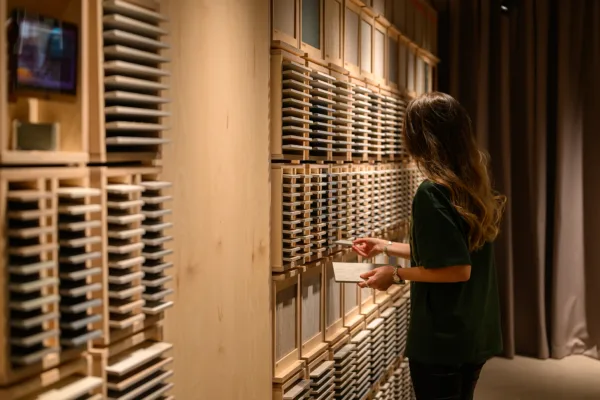
Solus Plus currently applies to ceramic and porcelain tiles from five of our core manufacturing partners. These factories were chosen not only for their technical capabilities and design strengths, but because we have long-standing relationships that allow for closer collaboration and deeper audits under BES 6001.
This focus doesn’t mean other suppliers fall short. In fact, many would meet or exceed the standard. But Solus Plus requires more than compliance: it depends on active engagement, data sharing, and the infrastructure to support continual improvement. That level of involvement is easier to achieve with selected partners.
“We originally looked at including glass, stone, terrazzo,” says Byron. “But every product type requires its own audit. Starting with porcelain and ceramic allowed us to go deep, not just broad.”
The result is a curated, high-performing tile portfolio backed by meaningful standards—and with room to grow.
Room to grow
The journey doesn’t end with certification. Solus will undergo annual audits, and scores can rise or fall depending on progress.
“It’s not a badge you stick on and forget about,” says Ken. “It encourages continual development, and that’s the whole point.”
Future plans include a new charity partnership with the Canal & River Trust, focused on environmental projects. While this initiative will fall under the next audit, it’s already shaping how the company thinks about community and biodiversity.
Holly Oag, Head of People, sees BES 6001 as a springboard:
“It’s a starting point. It gives us the momentum to do more internally and with our partners.”
A higher standard, made simple
Solus Plus is about transparency, trust, and making responsible sourcing easier for clients, for contractors, and for the industry at large.
By embedding BES 6001 into every level of the business, Solus is proving that it’s possible to go beyond compliance and drive genuine improvement. The process has required commitment—but it’s paying off in credibility, clarity, and long-term value.
For specifiers, that’s a rare combination: a wide product choice with sustainability you don’t have to second-guess.
NEWSLETTER
Get the latest news and updates sent straight to your inbox.


ReCover: designing for change, not waste
17th Feb 2026

Solus celebrates 30 years
11th Dec 2025


Automatica: Design, Dispense, Deliver
3rd Jul 2025


Goodbye to 2024
17th Dec 2024

Spolia wins the top spot at Mix Awards North
29th Nov 2024

Pantelleria – The Black Pearl of the Mediterranean
12th Sept 2024

Spolia longlisted for Dezeen Awards
12th Sept 2024


The story of the Ceramophone
23rd Feb 2024


Solus Clerkenwell reopens its doors
31st Jul 2023


How can design drive optimism and change?
15th Jun 2023


Quarry, Clay, and Kiln: The story of Ketley
19th May 2023


In conversation with Mauro Mazzi, CEO of Mirage
17th Apr 2023


How do materials shape positive experiences?
6th Oct 2022

Meet Ken Graham, Sustainability Manager
23rd May 2022


Blu Ponti reflects Sorrento’s stunning seascape
3rd Apr 2021

Solus celebrates 25 years
16th Mar 2020